UI / UX Design
SpendSense
Turning financial data into clear, meaningful insights that help users make better decisions with confidence.
Year :
2026
Industry :
Fintech
Client :
Self-initiated concept project
Project Duration :
2 weeks
Problem :
Many personal finance apps focus heavily on showing transactions, balances and spending data, but this doesn't always make it easy to understand where your money is actually going.
Through initial research, I found that financial tools could feel overwhelming or intimidating, particularly when users were faced with lots of information at once. This could make people more likely to avoid looking at their finances rather than engage with them.
This led me to explore how a finance app could make spending easier to understand at a glance, rather than simply giving users more data to work through.
Research :
I interviewed 5 users aged 24–35 who regularly use digital banking apps.
A few patterns came through:
4 out of 5 users said they avoided checking their finances unless they needed to.
Users found it difficult to spot spending patterns without manually going through their transactions.
Financial apps were described as “informative but stressful.”
I also looked at existing tools, including Revolut, to understand how they presented spending information. While these apps provide detailed tracking and categorisation, I found an opportunity to focus more on helping users make sense of their spending, rather than simply showing them the data.
Solution :
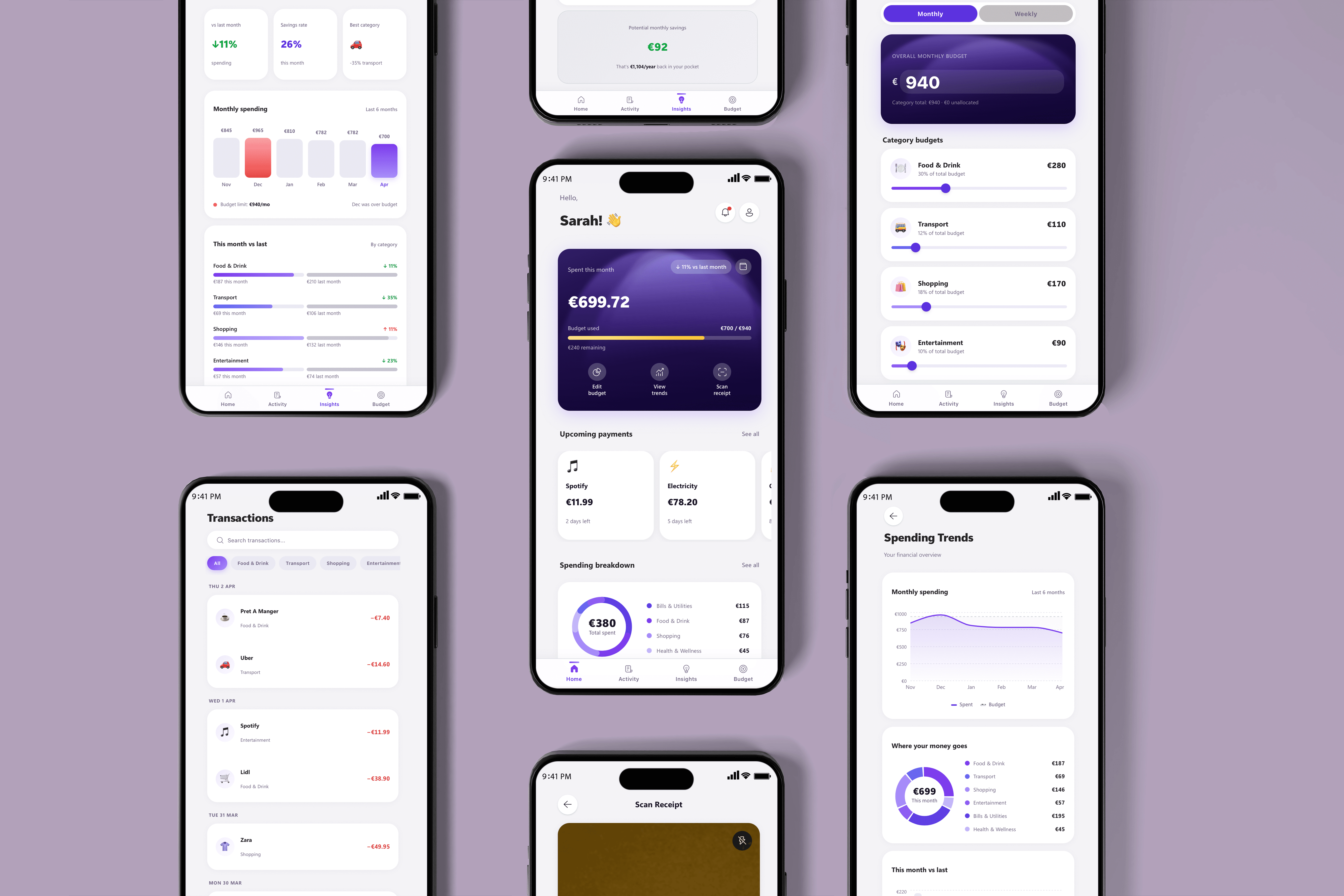
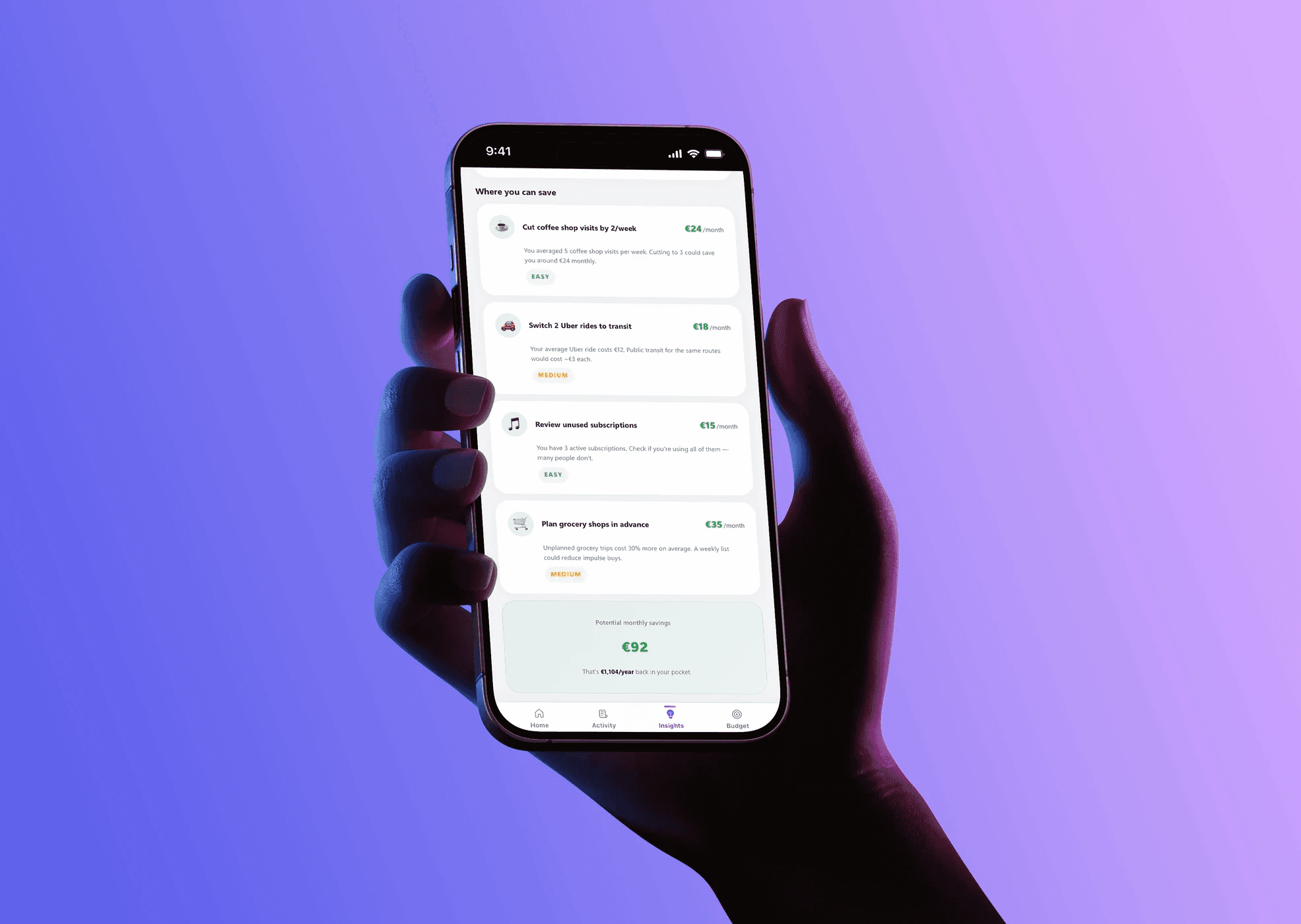
I designed a mobile app that focuses on helping users understand their spending, rather than simply showing them a list of transactions.
Key features include:
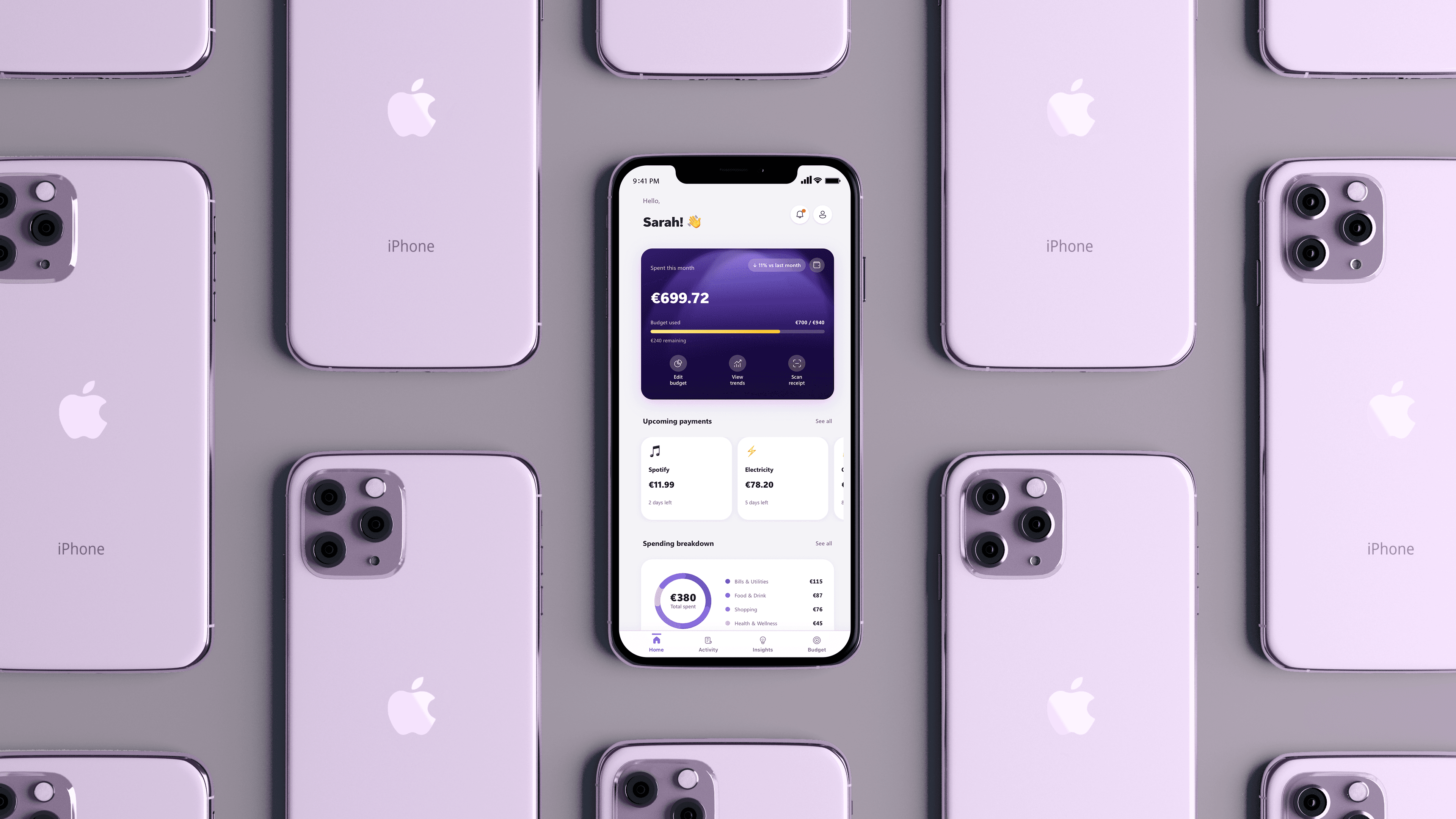
A simplified dashboard that highlights spending patterns instead of individual transactions
Contextual insights, such as “This week you overspent on Wednesday”
Visual summaries that make spending information easier to take in at a glance
The aim was to help users quickly see where and when they were spending, and make their financial habits easier to understand.
Challenge :
One of the main challenges was finding a way to simplify financial information without hiding the detail users might need.
I focused on:
Showing the most useful information first, with more detail available when needed
Using a clear visual hierarchy to make the information easier to scan
Keeping the language neutral and supportive, rather than making users feel guilty about their spending
I tested and refined the layouts throughout the process, making sure the information was easy to understand while still giving users enough detail to trust what they were seeing.

Constraints :
SpendSense was a self-initiated project, approached as an early-stage product concept for a hypothetical fintech startup.
I gave myself a 2-week timeframe and worked within a set of realistic product constraints:
Limited time for research, design and testing
Limited engineering resources
No access to live banking data or APIs
These constraints helped me focus on the core MVP experience rather than trying to design a complete banking product.
Outcome :
In usability testing:
Users were able to identify and explain their spending patterns more quickly than when reviewing individual transactions.
4 out of 5 participants said they felt less overwhelmed when looking at their finances.
The testing suggested that presenting spending as clear patterns and insights, rather than just a list of transactions, made the information easier to understand and engage with.

More Projects




Award Winner
Read
UI / UX Design
SpendSense
Turning financial data into clear, meaningful insights that help users make better decisions with confidence.
Year :
2026
Industry :
Fintech
Client :
Self-initiated concept project
Project Duration :
2 weeks
Problem :
Many personal finance apps focus heavily on showing transactions, balances and spending data, but this doesn't always make it easy to understand where your money is actually going.
Through initial research, I found that financial tools could feel overwhelming or intimidating, particularly when users were faced with lots of information at once. This could make people more likely to avoid looking at their finances rather than engage with them.
This led me to explore how a finance app could make spending easier to understand at a glance, rather than simply giving users more data to work through.
Research :
I interviewed 5 users aged 24–35 who regularly use digital banking apps.
A few patterns came through:
4 out of 5 users said they avoided checking their finances unless they needed to.
Users found it difficult to spot spending patterns without manually going through their transactions.
Financial apps were described as “informative but stressful.”
I also looked at existing tools, including Revolut, to understand how they presented spending information. While these apps provide detailed tracking and categorisation, I found an opportunity to focus more on helping users make sense of their spending, rather than simply showing them the data.
Solution :
I designed a mobile app that focuses on helping users understand their spending, rather than simply showing them a list of transactions.
Key features include:
A simplified dashboard that highlights spending patterns instead of individual transactions
Contextual insights, such as “This week you overspent on Wednesday”
Visual summaries that make spending information easier to take in at a glance
The aim was to help users quickly see where and when they were spending, and make their financial habits easier to understand.
Challenge :
One of the main challenges was finding a way to simplify financial information without hiding the detail users might need.
I focused on:
Showing the most useful information first, with more detail available when needed
Using a clear visual hierarchy to make the information easier to scan
Keeping the language neutral and supportive, rather than making users feel guilty about their spending
I tested and refined the layouts throughout the process, making sure the information was easy to understand while still giving users enough detail to trust what they were seeing.
Constraints :
SpendSense was a self-initiated project, approached as an early-stage product concept for a hypothetical fintech startup.
I gave myself a 2-week timeframe and worked within a set of realistic product constraints:
Limited time for research, design and testing
Limited engineering resources
No access to live banking data or APIs
These constraints helped me focus on the core MVP experience rather than trying to design a complete banking product.
Outcome :
In usability testing:
Users were able to identify and explain their spending patterns more quickly than when reviewing individual transactions.
4 out of 5 participants said they felt less overwhelmed when looking at their finances.
The testing suggested that presenting spending as clear patterns and insights, rather than just a list of transactions, made the information easier to understand and engage with.
More Projects
Award Winner
Read
UI / UX Design
SpendSense
Turning financial data into clear, meaningful insights that help users make better decisions with confidence.
Year :
2026
Industry :
Fintech
Client :
Self-initiated concept project
Project Duration :
2 weeks
Problem :
Many personal finance apps focus heavily on showing transactions, balances and spending data, but this doesn't always make it easy to understand where your money is actually going.
Through initial research, I found that financial tools could feel overwhelming or intimidating, particularly when users were faced with lots of information at once. This could make people more likely to avoid looking at their finances rather than engage with them.
This led me to explore how a finance app could make spending easier to understand at a glance, rather than simply giving users more data to work through.
Research :
I interviewed 5 users aged 24–35 who regularly use digital banking apps.
A few patterns came through:
4 out of 5 users said they avoided checking their finances unless they needed to.
Users found it difficult to spot spending patterns without manually going through their transactions.
Financial apps were described as “informative but stressful.”
I also looked at existing tools, including Revolut, to understand how they presented spending information. While these apps provide detailed tracking and categorisation, I found an opportunity to focus more on helping users make sense of their spending, rather than simply showing them the data.
Solution :
I designed a mobile app that focuses on helping users understand their spending, rather than simply showing them a list of transactions.
Key features include:
A simplified dashboard that highlights spending patterns instead of individual transactions
Contextual insights, such as “This week you overspent on Wednesday”
Visual summaries that make spending information easier to take in at a glance
The aim was to help users quickly see where and when they were spending, and make their financial habits easier to understand.
Challenge :
One of the main challenges was finding a way to simplify financial information without hiding the detail users might need.
I focused on:
Showing the most useful information first, with more detail available when needed
Using a clear visual hierarchy to make the information easier to scan
Keeping the language neutral and supportive, rather than making users feel guilty about their spending
I tested and refined the layouts throughout the process, making sure the information was easy to understand while still giving users enough detail to trust what they were seeing.
Constraints :
SpendSense was a self-initiated project, approached as an early-stage product concept for a hypothetical fintech startup.
I gave myself a 2-week timeframe and worked within a set of realistic product constraints:
Limited time for research, design and testing
Limited engineering resources
No access to live banking data or APIs
These constraints helped me focus on the core MVP experience rather than trying to design a complete banking product.
Outcome :
In usability testing:
Users were able to identify and explain their spending patterns more quickly than when reviewing individual transactions.
4 out of 5 participants said they felt less overwhelmed when looking at their finances.
The testing suggested that presenting spending as clear patterns and insights, rather than just a list of transactions, made the information easier to understand and engage with.
More Projects
Award Winner
Read